El problema típico
Muchos proveedores ofrecen el CSV detrás de un área privada. En el navegador funciona, pero en automatización suele fallar por:
- Sesiones que dependen de cookies (si no las guardas, te devuelven la pantalla de login).
- Redirecciones (si no sigues Location , te quedas a medias).
- Descargas que “parecen” un CSV pero realmente devuelven HTML.
- Concurrencia: dos procesos descargando a la vez se pisan (cookies o ficheros temporales).
Qué hace este código en ShopinCloud
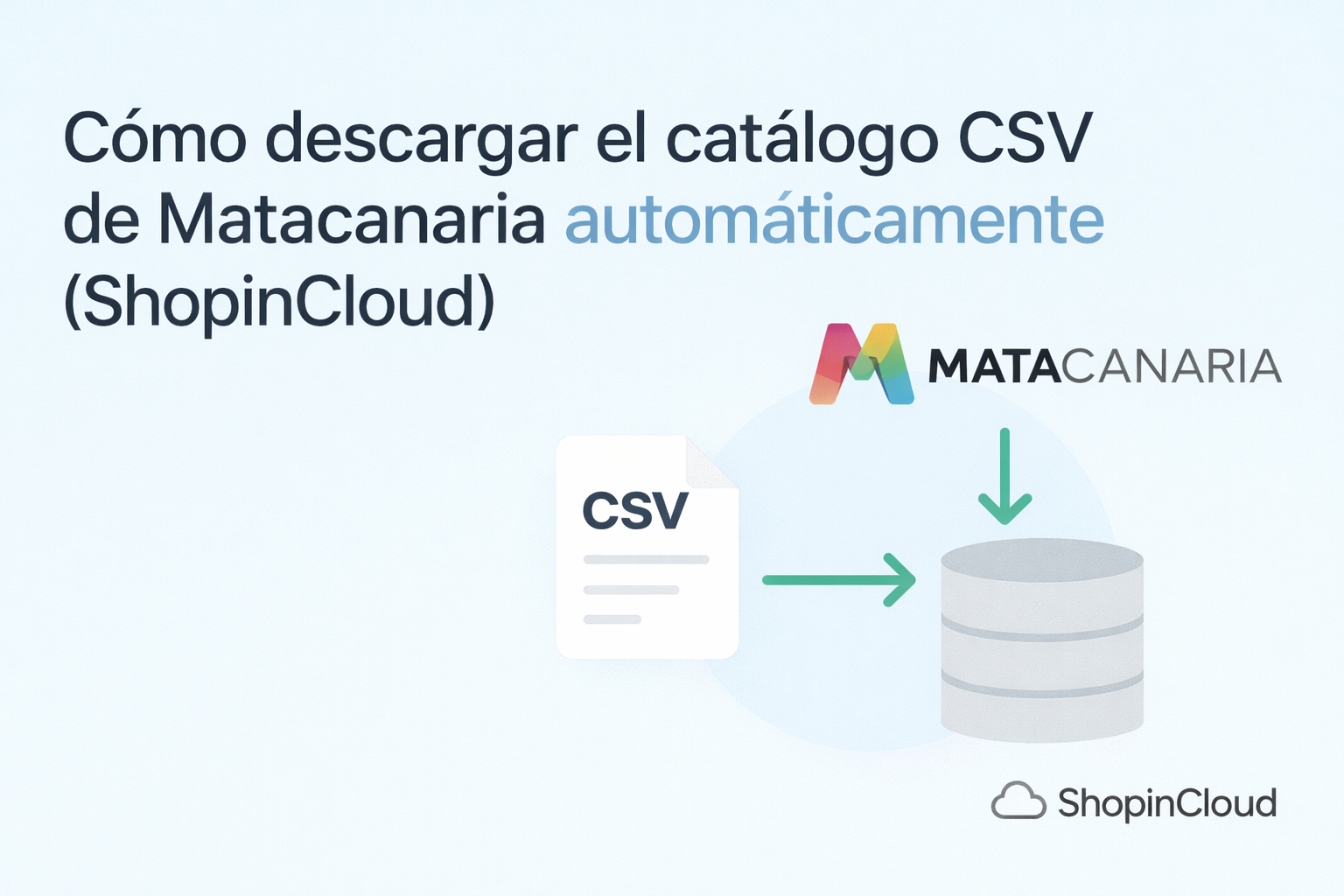
En ShopinCloud monté una acción que hace la descarga de forma robusta usando cURL y una carpeta temporal. La idea es: login → validar sesión → descargar CSV con la misma sesión → servir el CSV al usuario .
1) Login con cURL y persistencia de cookies
El script hace un POST al formulario de login y guarda la sesión en un cookie jar (fichero de cookies). Así, cuando se llama al endpoint real del CSV, Matacanaria ya reconoce la sesión.
- Se usa
CURLOPT_FOLLOWLOCATIONpara seguir redirecciones. - Se configura
CURLOPT_COOKIEJARpara persistir cookies en fichero. - Se valida que existan cookies (en memoria o en fichero) tras el login.
2) Carpeta temporal + lock para evitar concurrencia
Para que no haya dos descargas pisándose (especialmente con cookies), se crea un lock por email y se bloquea con flock(). Así garantizas que cada credencial mantiene su sesión limpia durante la descarga.
- Directorio temporal tipo:
cache/tmp/matacanaria. - Cookie file estable por usuario (hash del email).
- Lock file asociado a ese cookie file.
3) Descarga del CSV usando la misma sesión
Con el mismo handle de cURL ($ch), se cambia la URL al endpoint de descarga y se vuelca directamente a un fichero temporal con CURLOPT_FILE. Esto evita tener que cargar todo el CSV en memoria.
4) Validaciones “anti-login”
El fallo más común es que el endpoint devuelva HTML (login) en vez de CSV. Para detectarlo:
- Se leen los primeros bytes del fichero descargado y se busca
<html, “login” o “iniciar sesión”. - Se revisa el HTTP status (si no es 2xx/3xx, se elimina el fichero).
- Se calcula el tamaño real antes de servirlo (Content-Length).
5) Servir el CSV al navegador
Cuando el fichero ya está bien descargado, el script envía cabeceras de descarga (Content-Disposition) y hace readfile(). Además, limpia buffers con ob_end_clean() para evitar que se “ensucie” el CSV.
Recomendaciones rápidas
- No hardcodees credenciales en el código: usa variables de entorno o configuración cifrada en tu plataforma.
- Guarda logs solo si hace falta (y rota el fichero de verbose).
- Si el proveedor cambia el formulario o endpoint, centraliza esas URLs en config.
- Si hay varios usuarios/tiendas, genera cookie/lock por “cuenta” real del proveedor.
Código para compartir (sin credenciales)
Aquí tienes el código tal cual para que quien lo necesite lo adapte. Ojo: he eliminado email y password (y cualquier dato sensible). Configura tú las credenciales en tu sistema de configuración/entorno.
<?php

if (!defined('BASEPATH')) exit('No direct script access allowed');

class MY_matacanaria_action extends ED_Front_Actions
{
    // ✅ NO poner credenciales aquí. Cárgalas desde config/ENV.
    private $_email = '';
    private $_password = '';

    public function __construct()
    {
        parent::__construct();
    }

    public function downloadFile()
    {
        $loginUrl = 'https://www.matacanaria.com/iniciar-sesion?back=my-account';

        $email    = $this->_email;
        $password = $this->_password;

        if (empty($email) || empty($password)) {
            $this->output
                ->set_status_header(500)
                ->set_content_type('application/json')
                ->set_output(json_encode(['ok' => false, 'error' => 'Faltan credenciales Matacanaria en config']));
            return;
        }

        $catalogUrl = 'https://www.matacanaria.com/module/terranetpricelist/download'
            . '?getCsv=1&email=' . rawurlencode($email);

        $tmpDir = frontROOTPATH . 'cache/tmp/matacanaria';
        if (!is_dir($tmpDir)) {
            if (!mkdir($tmpDir, 0755, true)) {
                $this->output
                    ->set_status_header(500)
                    ->set_content_type('application/json')
                    ->set_output(json_encode(['ok' => false, 'error' => 'No se pudo crear el directorio temporal']));
                return;
            }
        }

        // Cookie estable + lock para evitar concurrencia pisándose
        $cookieFile = $tmpDir . DIRECTORY_SEPARATOR . 'matacanaria_cookie_' . md5($email) . '.txt';
        $lockFile   = $cookieFile . '.lock';

        $outFile = $tmpDir . DIRECTORY_SEPARATOR . 'matacanaria_catalog_' . date('Ymd_His') . '.csv';

        $lockFp = null;
        $fpOut  = null;
        $ch     = null;
        $verboseFp = null;

        try {
            $lockFp = @fopen($lockFile, 'c');
            if (!$lockFp) throw new Exception("No se pudo abrir lock: {$lockFile}");
            if (!flock($lockFp, LOCK_EX)) throw new Exception("No se pudo bloquear lock: {$lockFile}");

            // Cookie file limpio (sin helpers)
            @unlink($cookieFile);
            @touch($cookieFile);
            @chmod($cookieFile, 0666);
            clearstatcache(true, $cookieFile);

            // 1) LOGIN
            $postFields = http_build_query([
                'email'       => $email,
                'password'    => $password,
                'submitLogin' => '1',
            ]);

            $ch = curl_init();

            // Log opcional por si vuelve a fallar
            $verboseFp = @fopen($tmpDir . DIRECTORY_SEPARATOR . 'matacanaria_curl_verbose.log', 'ab');

            curl_setopt_array($ch, [
                CURLOPT_URL            => $loginUrl,
                CURLOPT_POST           => true,
                CURLOPT_POSTFIELDS     => $postFields,
                CURLOPT_RETURNTRANSFER => true,
                CURLOPT_FOLLOWLOCATION => true,
                CURLOPT_MAXREDIRS      => 10,

                // cookies en memoria + persistencia en fichero (debug)
                CURLOPT_COOKIEFILE     => '',          // activa engine cookies en memoria
                CURLOPT_COOKIEJAR      => $cookieFile,

                CURLOPT_SSL_VERIFYPEER => true,
                CURLOPT_SSL_VERIFYHOST => 2,
                CURLOPT_USERAGENT      => 'Mozilla/5.0 (CI cURL Matacanaria)',
                CURLOPT_HTTPHEADER     => ['Content-Type: application/x-www-form-urlencoded'],
                CURLOPT_TIMEOUT        => 60,

                CURLOPT_VERBOSE        => $verboseFp ? true : false,
                CURLOPT_STDERR         => $verboseFp ?: null,
            ]);

            $loginBody = curl_exec($ch);
            if ($loginBody === false) {
                throw new Exception("Login falló (cURL): " . curl_error($ch));
            }

            $loginHttp = (int) curl_getinfo($ch, CURLINFO_HTTP_CODE);
            if ($loginHttp < 200 || $loginHttp >= 400) {
                throw new Exception("Login falló (HTTP {$loginHttp})");
            }

            // ✅ Validación robusta: cookies en memoria (no filesize)
            $cookieList = curl_getinfo($ch, CURLINFO_COOKIELIST);
            $hasCookies = is_array($cookieList) && count($cookieList) > 0;

            // Fallback: contenido del cookieFile
            clearstatcache(true, $cookieFile);
            $cookieTxt = @file_get_contents($cookieFile);
            $cookieLen = strlen((string)$cookieTxt);

            if (!$hasCookies && $cookieLen === 0) {
                throw new Exception("Login sin cookies (no se generó sesión).");
            }

            // 2) DESCARGAR CSV (mismo $ch => misma sesión)
            $fpOut = fopen($outFile, 'wb');
            if ($fpOut === false) {
                throw new Exception("No se pudo crear el fichero de salida: {$outFile}");
            }

            curl_setopt_array($ch, [
                CURLOPT_URL            => $catalogUrl,
                CURLOPT_HTTPGET        => true,
                CURLOPT_POST           => false,
                CURLOPT_POSTFIELDS     => null,
                CURLOPT_RETURNTRANSFER => false,
                CURLOPT_FILE           => $fpOut,
                CURLOPT_TIMEOUT        => 120,
                // Por si el endpoint mira la cabecera Accept:
                CURLOPT_HTTPHEADER     => ['Accept: text/csv,*/*;q=0.8'],
            ]);

            $ok = curl_exec($ch);
            if ($ok === false) {
                throw new Exception("Descarga CSV falló (cURL): " . curl_error($ch));
            }

            $http        = (int) curl_getinfo($ch, CURLINFO_HTTP_CODE);
            $contentType = (string) curl_getinfo($ch, CURLINFO_CONTENT_TYPE);

            fflush($fpOut);
            fclose($fpOut);
            $fpOut = null;

            if ($http < 200 || $http >= 400) {
                @unlink($outFile);
                throw new Exception("Descarga CSV falló (HTTP {$http})");
            }

            // Check anti-HTML (si te devuelve login)
            clearstatcache(true, $outFile);
            $head = $this->readFirstBytes($outFile, 1024);
            if (stripos($head, '<html') !== false || stripos($head, 'iniciar sesión') !== false || stripos($head, 'login') !== false) {
                @unlink($outFile);
                throw new Exception("Devolvió HTML (probable no autenticado). Content-Type: {$contentType}");
            }

            // Tamaño robusto
            clearstatcache(true, $outFile);
            $outSize = @filesize($outFile);
            if (!$outSize || $outSize <= 0) {
                $outSize = strlen((string)@file_get_contents($outFile));
            }

            // 3) SERVIR CSV AL NAVEGADOR
            $filename = 'catalog_matacanaria_' . date('Ymd_His') . '.csv';

            header('Content-Description: File Transfer');
            header('Content-Type: text/csv; charset=UTF-8');
            header('Content-Disposition: attachment; filename="' . $filename . '"');
            header('Content-Transfer-Encoding: binary');
            header('Cache-Control: must-revalidate');
            header('Pragma: public');
            header('Expires: 0');
            if ($outSize > 0) {
                header('Content-Length: ' . $outSize);
            }

            while (ob_get_level()) {
                @ob_end_clean();
            }

            readfile($outFile);
            exit;

        } catch (Exception $e) {
            while (ob_get_level()) {
                @ob_end_clean();
            }
            http_response_code(500);
            header('Content-Type: application/json');
            echo json_encode(['ok' => false, 'error' => $e->getMessage()]);
            exit;

        } finally {
            if (is_resource($fpOut)) @fclose($fpOut);
            if (is_resource($ch)) @curl_close($ch);
            if (is_resource($verboseFp)) @fclose($verboseFp);
            if (is_resource($lockFp)) {
                @flock($lockFp, LOCK_UN);
                @fclose($lockFp);
            }

            // Si quieres conservar cookie para inspección, comenta esto:
            // @unlink($cookieFile);

            if (isset($outFile) && is_file($outFile)) {
                register_shutdown_function(function() use ($outFile) {
                    @unlink($outFile);
                });
            }
        }
    }

    private function readFirstBytes($file, $bytes = 512)
    {
        $fh = @fopen($file, 'rb');
        if (!$fh) return '';
        $data = fread($fh, $bytes);
        fclose($fh);
        return $data !== false ? $data : '';
    }
}